Hospitals Must Clean Medical Equipment!
September 29, 2015
 Free Consultation
(610) 667-7511
Free Consultation
(610) 667-7511

 Free Consultation
(610) 667-7511
Free Consultation
(610) 667-7511
Infections at hospitals are a serious and dangerous problem. Sometimes those infections are simply a risk of surgery or a stay in the hospital. But other times, the infection is a direct result of a failure to properly clean instruments or follow other cleanliness requirements. Frequently, the problem is not with traditional metal instruments, which are easy to clean, but more complicated medical tools such as endoscopies that are frequently used in gallbladder surgery.
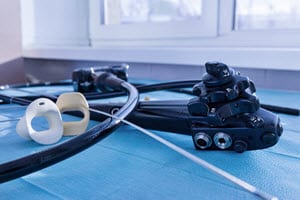
There are many types of endoscopes. They can often be more difficult to clean than simple medical equipment.
Early in 2015, the FDA released a warning notice regarding duodenoscopes. These devices need to be cleaned properly in order to avoid, “infectious agents,” including those likely to cause “multidrug-resistant bacterial infections.” The problem is that if not properly cleaned, “[r]esidual body fluids and organic debris may remain in” crevices of the devices. In an updated report, the FDA provides specific recommendations on making certain these scopes are safe for subsequent patients. While the FDA cannot force design changes in medical equipment, it can withdraw permission to use certain types of equipment if the problem becomes too serious.
Hospitals are required to set and follow sanitary protocols for all medical equipment. If they fail to do so and the patient experiences a life-threatening or even deadly infection, this could lead to a medical malpractice claim. The protocols required are set by what is standard in hospitals across the United States, but they may include:
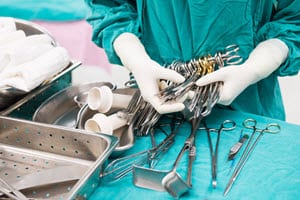
Hospitals are required to properly sanitize their instruments to protect patients from infections.
If you notice that a hospital failed to properly sterilize equipment, obviously it is best to speak up before such equipment is used. But rarely would a patient or family member know if a piece of medical equipment has been properly cleaned. If you believe that your infection occurred due to an error in the hospital, the best solution is to speak with a medical malpractice lawyer to help you determine if there is a relationship between negligence at the hospital and your serious injuries. Feel free to contact us at Lowenthal & Abrams and we can help you determine whether you have a claim for your injuries, loss of wages and pain and suffering.
The integrity of a healthcare facility is measured by its commitment to patient safety, and nowhere is this more evident than in the sterile processing department. When we think of medical errors, we often imagine surgical slips or medication mistakes. However, the use of contaminated surgical instruments is a silent but devastating form of medical negligence.
The complexity of modern medical devices has made sterilization a high-stakes endeavor. While older instruments were primarily made of heat-resistant metal or glass, today’s high-tech tools often involve intricate hinges, lumens (internal channels), and delicate components that cannot withstand traditional high-heat autoclaving. These semi-critical devices require specialized high-level disinfection (HLD) or liquid chemical sterilization. If a hospital fails to keep pace with these technological demands, the clean instrument used in your procedure might actually be a conduit for life-threatening bacteria.
A Hospital-Acquired Infection (HAI), also known as a nosocomial infection, is any infection that a patient develops while receiving treatment for another condition in a healthcare setting. According to the CDC, approximately 1 in 31 hospital patients has at least one HAI on any given day.
While not every infection is grounds for a lawsuit, hospital infection control failures often cross the line into medical malpractice. For a claim to be valid, it must be shown that the facility deviated from the standard of care, the generally accepted protocols that a reasonable hospital would follow under similar circumstances. Common failures include:
Cleanliness in medical settings isn’t just about appearance; it’s about chemistry. Hospitals must use hospital-grade disinfectants that are EPA-approved to kill the most resilient pathogens. Standard household cleaners are insufficient for a clinical environment where “superbugs” like MRSA (Methicillin-resistant Staphylococcus aureus), C. diff (Clostridioides difficile), and VRE (Vancomycin-resistant Enterococci) thrive.
Negligence can occur when a hospital fails to:
Determining liability in a medical malpractice case involving dirty equipment can be complex. Depending on the circumstances, several parties may be held accountable:
Under the legal doctrine of corporate negligence, hospitals have a non-delegable duty to provide a safe environment. This includes maintaining functional sterilization equipment, hiring competent staff, and enforcing strict infection control policies.
These professionals are the unsung heroes of the OR, but if they are untrained or uncertified, the risk of error skyrockets. Surprisingly, many states do not require formal certification for sterile processing technicians. If a technician fails to follow the manufacturer’s instructions for use (IFU), they, and their employer, may be liable.
Many modern hospitals outsource their instrument reprocessing to off-site vendors. If a third-party company delivers sterile kits that are actually contaminated with bone, tissue, or blood from a previous patient, that company can be sued for negligence.
Sometimes, the fault lies in the design. If a medical device is designed with blind spots or crevices that are impossible to clean even when following all protocols, the manufacturer may be held liable under product liability laws.
When a patient is exposed to a dirty instrument, the resulting infection can lead to sepsis, the body’s extreme, life-threatening response to an infection. Sepsis can cause organ failure, tissue damage, and death. Even for those who survive, the evergreen impact of such negligence includes the following:
The financial burden of these complications is staggering. A patient who entered the hospital for a routine gallbladder removal may find themselves facing hundreds of thousands of dollars in additional medical bills because a technician failed to spend five extra minutes cleaning a duodenoscope.
Because patients are typically under anesthesia when contaminated equipment is used, proving the source of an infection requires a deep dive into hospital records. A skilled Philadelphia medical malpractice lawyer will look for:
You have the right to be treated in a facility that prioritizes your safety over its bottom line. While you cannot see the microscopic bacteria on a surgical tray, you can look for signs of a negligent environment. Are the floors stained? Do staff members move from patient to patient without changing gloves or washing hands? Does the facility seem chronically understaffed?
If you or a loved one developed a severe infection shortly after a medical procedure, do not assume it was just bad luck. Medical facilities have a legal and ethical obligation to ensure that every tool used on your body is free of the previous patient’s biological remains.
At Lowenthal & Abrams, P.C., we have seen firsthand how a single dirty instrument can destroy a life. We believe that cleanliness isn’t just a goal, it is a requirement. If a hospital’s failure to follow sterilization protocols has left you with a life-altering infection, you deserve answers and compensation.
Our legal team includes medical professionals who understand the nuances of sterile processing and can identify exactly where the protocol broke down. We fight to hold negligent hospitals accountable for their failure to protect the people in their care.
Call us today at 888-688-0316 or fill out our contact form to schedule a free consultation. Let us help you determine if your injury was a preventable result of hospital negligence.
LOWENTHAL AND ABRAMS, P.C.












Contact us for a FREE consultation. No fee unless compensated.