How Radiology Errors Lead to Misdiagnosis?
April 16, 2026
 Free Consultation
(610) 667-7511
Free Consultation
(610) 667-7511

 Free Consultation
(610) 667-7511
Free Consultation
(610) 667-7511
Modern medicine is an invisible science. When a doctor suspects an illness, they rely on the eyes of the radiologist to look beneath the skin. Whether it is a routine mammogram, an emergency CT scan after a car accident, or an MRI to investigate chronic pain, the radiologist’s report is the foundation of your treatment plan.
But what happens when those eyes fail? When a radiologist misreads an image, the entire medical process collapses. A patient with a growing tumor is sent home with a clean bill of health, while a patient with a clear scan might be subjected to invasive, unnecessary surgery.
At Lowenthal & Abrams, P.C., we understand that a radiology error is a silent catastrophe. Because our legal team includes an on-staff medical doctor and a registered nurse, we do not just take the hospital’s word for it. We review the original imaging discs (DICOM files) to see exactly what the radiologist missed.
A radiology error occurs when a medical professional fails to correctly interpret or communicate the findings of a diagnostic imaging study. In the context of a misdiagnosis, these errors generally fall into three categories:
This is the most common type of mistake. The abnormality (such as a lung nodule or a hairline fracture) is clearly visible on the scan, but the radiologist simply fails to see it. Research suggests that perceptual errors account for nearly 80% of all radiology-related lawsuits.
In this scenario, the radiologist sees the spot or abnormality, but they misidentify it. They might label a malignant tumor as a benign cyst or a shadow caused by the imaging equipment. This leads to a false sense of security for the patient.
Sometimes the radiologist finds the problem but fails to flag it as a critical value. If the finding is not communicated urgently to the ordering physician, the report may sit in a digital inbox for weeks while the patient’s condition worsens.
The pressure on modern radiologists is immense. In 2026, the volume of imaging studies performed in the United States had reached an all-time high, creating a factory environment in many hospital basements.
Radiologists are often required to read hundreds of images per shift. Studies published in the journal Radiology indicate that as a shift progresses, the miss rate increases significantly due to search fatigue. When a doctor spends only seconds looking at a complex MRI, the risk of overlooking a subtle malignancy skydives.
A radiologist often works in a vacuum. If the ordering physician provides vague notes (such as pain instead of localized lower right quadrant pain), the radiologist may not know which specific area requires the most scrutiny.
While rare, errors can also stem from the tech performing the scan. If the patient moves or the contrast dye is not administered correctly, the resulting image may be noisy or blurred. A negligent radiologist might try to interpret a poor-quality image rather than ordering a retake.
The data surrounding imaging errors proves that these are not isolated slips: they are systemic failures.
Radiology errors are most dangerous when they involve time-sensitive conditions. At Lowenthal & Abrams, P.C., we frequently see these seven conditions missed on initial scans:
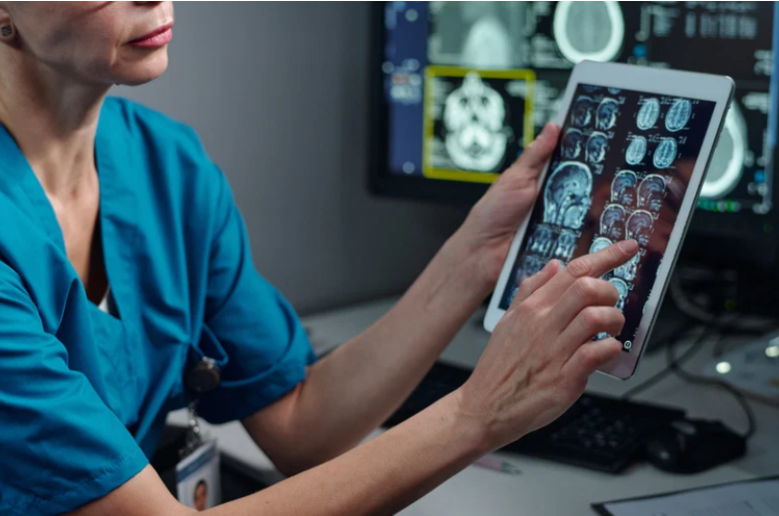
Proving a radiology error requires more than just showing a second opinion. It requires a forensic deep dive into the digital footprint of the original scan. At Lowenthal & Abrams, P.C., our medical-legal team uses three specific tools to hold negligent radiologists accountable.
Every digital medical image contains metadata: a digital log of how the radiologist interacted with the file. We can often see exactly how much time a radiologist spent on your specific study. If the metadata shows they spent only 40 seconds reviewing a 300-slice CT scan, it becomes a powerful piece of evidence that they rushed the interpretation and breached the standard of care.
When we send your scans to our network of independent board-certified radiologists, we often perform a masked review. We ask the specialist to look at the scan without telling them where the cancer was eventually found. When a top-tier specialist identifies the abnormality immediately on the original clear scan, it proves the original error was inexcusable and indefensible.
Often, a radiologist is so focused on the reason for the scan (such as a broken bone) that they ignore a suspicious mass in the corner of the image. The law requires radiologists to report all significant findings, even if they are not what the doctor was looking for. We look for these incidentalomas that were visible but never mentioned in the final report.
Radiology cases are won or lost on the images themselves. You need a firm that has the clinical capability to challenge the hospital’s specialists in their own language.
If you suspect your condition was missed because of a radiology error, you deserve answers. Your health is too important to leave to a rushed report or a fatigued physician.
Reach out to Lowenthal & Abrams, P.C. now to schedule your complimentary, no-risk case evaluation. Our medical-legal professionals are ready to analyze your imaging results and advocate for the justice your case demands.
Take the first step toward holding the responsible parties accountable by calling our office or completing our contact form today.
LOWENTHAL AND ABRAMS, P.C.



















Contact us for a FREE consultation. No fee unless compensated.