What Qualifies as a Botched Surgery in a Medical Malpractice Case?
April 16, 2026
 Free Consultation
(610) 667-7511
Free Consultation
(610) 667-7511

 Free Consultation
(610) 667-7511
Free Consultation
(610) 667-7511
When we go under the knife, we place our lives and futures in the hands of surgical teams. We expect precision, focus, and adherence to the highest medical standards. But what happens when you wake up and realize something went terribly wrong?
In the legal world, botched is not a technical term, but in the medical world, it describes a reality of pain, revision surgeries, and broken trust. However, not every bad surgical outcome is grounds for a lawsuit. To win a medical malpractice case, you must prove that the error was not just a known risk, but a direct result of negligence.
At Lowenthal & Abrams, P.C., we bridge the gap between complex medicine and the law. With a medical doctor and a registered nurse on our legal staff, we do not just look at your case as a set of papers: we analyze your surgical logs with the eyes of healthcare professionals.
A surgery is considered botched when a preventable error occurs that falls below the accepted professional standard of care. This isn’t just about a messy scar or a bit of soreness that won’t go away. We’re talking about a serious breakdown in the operating room, a mistake that fundamentally changed someone’s life for the worse.
To qualify as a valid medical malpractice case in states like Pennsylvania, New Jersey, or New York, four specific criteria must be met:
While we like to think of operating rooms as perfectly controlled environments, they are subject to the same human failings as any other workplace, but with much higher stakes.
If you suspect your surgeon made a mistake, look for these red flags. These are often the starting points for the cases we investigate at Lowenthal & Abrams, P.C.
These are errors that should never happen if safety protocols are followed. Examples include operating on the left knee instead of the right, or performing a gallbladder removal on a patient scheduled for a hernia repair.
Leaving sponges, needles, or surgical clamps inside a patient is a classic sign of negligence. These objects often cause severe internal infections and require an immediate second surgery to remove them.
While some contact with nearby tissue is expected, severing a nerve or perforating a healthy organ like the bladder or bowel during a routine procedure can lead to permanent loss of function or sepsis.
If you woke up during surgery or suffered a brain injury due to a lack of oxygen, the anesthesiologist may have failed to monitor your vitals properly.
A surgery can be a legally botched surgery even if it was technically successful, if the doctor failed to tell you about a major risk that eventually happened. You have the right to know what could go wrong before you agree.
The surgery does not end when the stitches are in. If the staff fails to spot a mounting infection or ignores signs of internal bleeding in the recovery room, it may be considered malpractice.
If you have to go back under the knife because the first surgeon did not finish the job or made a corrective error, that is a significant indicator of malpractice.
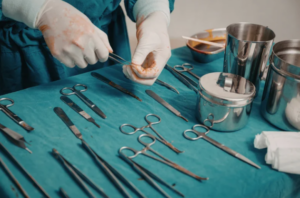
The numbers behind surgical errors are a sobering reminder of why patients must be their own advocates.
Medical malpractice cases are won and lost in the details of the medical records. Most law firms have to hire outside consultants just to understand what your surgical report says. We do not have to wait.
A botched surgery can leave you with more than just physical scars: it can take away your ability to work and your quality of life. You do not have to wonder if you have a case.
Contact Lowenthal & Abrams, P.C. today for a free, no-obligation consultation. Let our medical and legal professionals look at your story and tell you exactly where you stand.
No. Every surgery has known risks like minor scarring or slow healing. Malpractice only occurs when the doctor’s actions deviate from the Standard of Care.
In most states, like PA and NJ, the Statute of Limitations is generally two years from the date you discovered the injury. However, there are many exceptions, so you should consult an attorney immediately.
In Pennsylvania and New Jersey, you cannot simply file a lawsuit. A qualified medical expert must first review your records and sign a statement confirming that there is a reasonable probability that malpractice occurred.
Yes. A consent form is not a get out of jail free card for the surgeon. You consented to the risks of the surgery, not to the surgeon being negligent or reckless.
LOWENTHAL AND ABRAMS, P.C.




















Contact us for a FREE consultation. No fee unless compensated.